

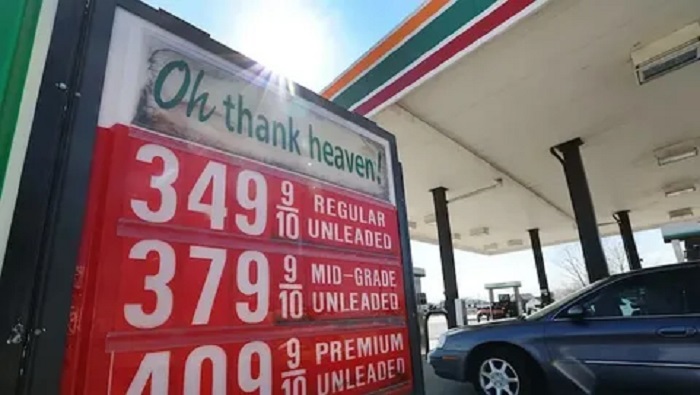
Gas prices can feel random. You can fill up in one state, drive across a border, and suddenly see a noticeably different price on the sign.
Part of that difference comes from oil prices, refinery access, local competition, and transportation costs. But one of the easiest factors to overlook is state fuel tax.
Every driver pays the federal gasoline tax, but each state adds its own gasoline taxes and fees on top of that. Those state-level charges can vary a lot, which is why gas can be much cheaper in one state than in a neighboring one.
According to the U.S. Energy Information Administration, state gasoline taxes and fees ranged from about 70.9 cents per gallon in California to 9 cents per gallon in Alaska as of January 1, 2026. That is a huge gap before even considering local prices, supply costs, or seasonal fuel rules.
For drivers who travel often, commute across state lines, or plan road trips, it helps to understand how these taxes work. A simple gas tax by state comparison can show which states have the highest and lowest fuel tax rates and why pump prices often look so different across the country.
State Taxes Are Only One Part of the Gas Price
Gasoline prices are built from several layers.
The biggest part is usually crude oil. When oil prices rise, pump prices often rise too. Refining costs, distribution, marketing, and station-level competition also affect what drivers pay.
Taxes are another layer. The federal gasoline tax is the same across the country, but state taxes are not. Some states rely heavily on fuel taxes to fund roads, bridges, and transportation projects. Others keep gasoline taxes much lower.
That means two states can have the same national oil market, the same federal tax, and similar wholesale fuel costs, but still show different prices at the pump because their state taxes and fees are different.
Why Border Areas Often Have Big Price Gaps
The difference becomes especially obvious near state borders.
A driver in a high-tax state may be only a few miles from a lower-tax state. If the price difference is large enough, some drivers will cross the border to fill up, especially if they have a large tank or already travel that route.
This is common around metro areas that sit near state lines. For example, drivers may compare prices between Illinois and Indiana, New York and New Jersey, or California and Arizona. The decision is not always just about taxes, but taxes are often part of the reason the price gap exists.
Of course, crossing a border for cheaper gas only makes sense if the savings are larger than the cost of the extra driving. A 20-cent difference may not matter if you have to drive far out of your way. A larger gap might matter if the station is already on your route.
Why Some States Have Higher Gas Taxes
States use gasoline taxes for transportation funding. In many cases, the money helps pay for highways, road repairs, bridges, public transit, and other infrastructure needs.
Higher-tax states may have larger road networks, more expensive construction costs, stricter environmental rules, or bigger transportation budgets. Some states also adjust fuel taxes over time for inflation or transportation funding needs.
Lower-tax states may use different funding sources or simply choose to keep fuel taxes lower.
This is why a state-by-state view is useful. Gas taxes are not just a random fee. They are often tied to how each state funds transportation.
Taxes Do Not Explain Everything
It is important not to blame every gas price difference on taxes.
Regional gasoline prices can vary because of refinery locations, fuel supply routes, fuel specifications, distribution costs, and local market conditions. States farther from refineries may pay more for transportation. Areas with special fuel requirements may also have higher costs.
So, if one state has more expensive gas than another, taxes may be a major reason, but not always the only reason.
That is why drivers should look at both the tax rate and the real pump price. A state with a higher tax may not always have the highest gas price every day, especially if supply conditions are better than in another region.
How Drivers Can Use Gas Tax Data
Gas tax data is useful for more than trivia.
It can help road-trippers estimate travel costs. It can help commuters understand why fuel is cheaper across a border. It can also help voters and taxpayers see how their state funds transportation compared with other states.
A good comparison should include more than just one number. Ideally, it should show the state gasoline tax, diesel tax where relevant, the federal tax, and a ranking from highest to lowest.
That kind of context makes fuel prices easier to understand. Instead of only asking why gas is expensive, drivers can see how much of the price is tied to public policy and how much may be tied to broader market conditions.
For broader state-by-state guides, rankings, and educational comparisons, USA Symbol also organizes U.S. state information in a way that makes it easier to compare states side by side.
Bottom Line
Gas prices vary from state to state because many factors overlap: oil prices, refining, transportation, local competition, environmental rules, and taxes.
State gasoline taxes are one of the clearest pieces of that puzzle. They are not the only reason gas costs more in some places, but they can create real differences, especially near state borders.
For drivers, the practical takeaway is simple: before assuming one station or one state is just more expensive, check how fuel taxes compare. In some cases, the difference at the pump starts with the tax policy behind it.