

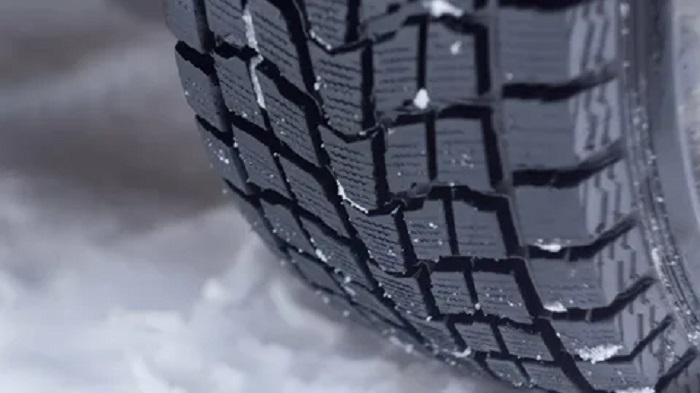
Your first Finnish winter behind the wheel is a rude awakening. One morning the road looks fine. By the afternoon it’s a sheet of black ice, and the car in front of you is doing a slow, graceful pirouette into a snowbank. This is the country that basically invented serious winter tires, so the rules here are stricter than almost anywhere else in Europe. If Finnish isn’t your first language, the official texts are a slog. Here’s the short version.
First, the law. Winter tires are mandatory whenever the weather or the road demands it, roughly between November and the end of March. It used to be tied strictly to the calendar; now it follows the actual conditions. In practice, if there’s snow or ice and you’re on summer rubber, you’re breaking the law and, more to the point, you’re a hazard. Get caught and you’re looking at a 100-euro penalty. Slide into someone and it gets a lot more expensive than that.
Then comes the big Finnish debate: studded or non-studded. Studded tires, nastarenkaat, have little metal pins that bite into ice. Nothing grips glare ice better, full stop. The trade-off is noise, a rougher ride, and they chew up bare asphalt. Non-studded winter tires, the friction type or kitkarenkaat, stay quieter and can be used year-round in cold months without the seasonal date limits that apply to studs. Rough rule of thumb: up north and out east, people run studs. Around Helsinki and the south, plenty go friction. Neither is “wrong.” It depends on where and how you drive.
One thing that trips people up, because it changed recently: a friction tire now has to carry the 3PMSF marking, the little mountain-and-snowflake symbol, to count as a proper winter tire for a car. The old “M+S” stamp on its own no longer cuts it. If you’re buying used tires from someone on Tori, check the sidewall before you hand over cash.
A couple of numbers worth remembering. The legal minimum tread for winter tires is 3 millimeters, not the 1.6 you might know from summer rules. And below about 4 millimeters, a winter tire is already losing its edge on snow, whatever the law says. Buy early, too. Come the first real snowfall in October, every tire shop in the country is booked solid and prices climb.
You don’t have to buy at a physical shop, though, and that’s where a lot of newcomers overpay. Ordering online is usually cheaper and you skip the queue entirely. Shops like BEIZ let you search by your car or punch in the size and compare thousands of tires in a couple of minutes, with delivery straight to your door or to a fitting garage. If you’re not sure of your size, it’s printed on the sidewall of your current tires in a format like 205/55R16, one of the most common fitments on Finnish roads. Match that, mind the load and speed rating, and you’re set.
None of this is complicated once you’ve done it once. Get proper winter tires on before the ice arrives, keep an eye on the tread, and Finnish winter driving stops being scary and goes back to being just cold.