

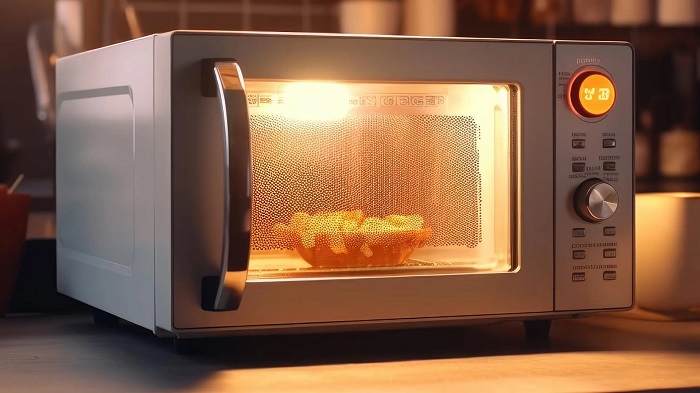
If the microwave turns on, the light comes on, the plate spins, but the food remains cold, the problem is almost always related to high-voltage components or improper heating conditions (cookware, mode, ventilation). Sometimes the symptoms resemble a malfunction, but the cause is simple: an incorrect mode or a poor door contact.
Below are common reasons why a microwave oven stops heating, and troubleshooting steps – from safe checks to repairs best left to a microwave repair service specialist.
Safe diagnostics: what you can check yourself
Important: There are high-voltage components inside the microwave that can retain a dangerous charge even after unplugging. If disassembling the housing is necessary, it is safer to stop and contact a specialist.
1) Incorrect mode, power, or timer
Sometimes the problem lies in the settings: the “defrost” mode is selected, the power is reduced, or the time is too short.
- Set the power to maximum and heat a glass of water (200-250 ml) for 60-90 seconds.
- If the water is slightly warm or cold, there is likely a malfunction in the heating circuit.
2) Cookware and food interfere with heating
Inappropriate cookware may shield the microwaves or barely heat up.
- Use glass/ceramics without a metallized pattern.
- Do not place metal objects, foil, or cookware with a “gold” pattern on the surface. “border.”
- Dense foods (e.g., refrigerated meat) require more time and stirring.
3) The door does not close tightly
The microwave may “work,” but if there are problems with the door locks/catches or microswitches, the heating will not start.
- Inspect the latches and seal: make sure there are no warps, dirt, or crumbs.
- Close the door tightly until it clicks; Try pressing lightly with your hand during the water test (do not hold it for too long).
4) Overheating and Protection
If the oven has been running for a long time, the vents are clogged, or the fan is broken, the thermal protection may be activated.
- Unplug for 20-30 minutes, ensure air access to the grates.
- Clean the ventilation areas of dust, do not block the vents with objects.
Signs that there is no heating: there is sound, the light is on, the food is cold
If the microwave starts, the light inside is on, you can hear the usual operating sounds (buzzing, relay clicking, plate spinning), but the food remains cold, this means that the chamber is functioning, but the heating unit is not emitting microwave energy or it is not reaching the chamber.
This scenario is usually not related to the settings, but to malfunctions in the high-voltage section, protective elements, or components involved in the generation and transmission of microwaves.
How to recognize “it works but doesn’t heat” and what this usually means
- There is light and the tray is rotating, but there is no heating – the power supply and some of the mechanics are working properly; there is likely a problem in the magnetron circuit or high-voltage unit.
- A “quieter” operation than usual is heard – often there is no load on the high-voltage circuit: the transformer/inverter does not turn on, the fuse/thermal protection has tripped.
- A burning smell, cracking, or sparking – possible burnouts in the mica plate, waveguide, or magnetron cap; Use should be discontinued.
- Heating appears and disappears intermittently – possible overheating and activation of thermal sensors, poor contacts, or magnetron degradation.
- Heating is very weak and lasts longer than usual – decreased power (magnetron wear, power supply problems, capacitor/diode failure, power sags).
- Check simple causes: “defrost” mode, low power, timer/program, is the door closed tightly, is the chamber overloaded.
- Stop use if suspicious symptoms appear: sparking, odor, smoke, unusually loud hum.
- Evaluate whether service is required: if there is no heating, diagnostics of the high-voltage part (magnetron, diode, capacitor, fuses, inverter/transformer, thermal protection, contacts) is almost always necessary.
Result: combination “There’s sound, the light is on, the food is cold” is a typical sign that the microwave is starting, but the heating circuit isn’t working or is operating with reduced power. Limit yourself to checking the settings and obvious external causes, and if the problem persists, contact a service center: attempting to repair high-voltage components yourself is unsafe.