

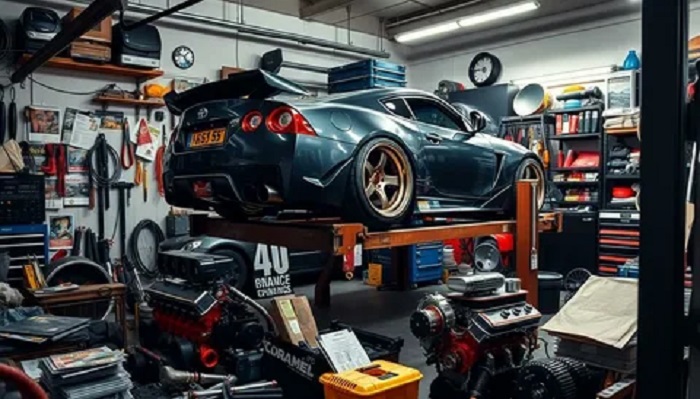
Almost every car on the road is a compromise. Manufacturers build for the average buyer, the average road and the average budget. Tuning exists to remove those compromises and shape a car around one person: its owner. The difficulty is knowing where to begin, because the list of possible modifications is endless and not all of them deserve your money.
Start with a goal, not a part
The most expensive mistake in tuning is buying parts without a plan. A set of wheels here, a spoiler there, and soon the car is a collection of unrelated ideas. Before spending anything, decide what you want the car to be:
- a comfortable daily driver with a sharper look;
- a fast road car with real performance gains;
- a show car built to stand out;
- a mix of these, with clear priorities.
Every later decision becomes easier once this is settled.
The upgrades that change the most
Wheels and tyres. Nothing alters the appearance and feel of a car as quickly. Quality tyres also improve grip and braking, which makes them the best first step for any build.
Suspension. Lowering springs or coilovers reduce body roll and close the gap between tyre and arch. The car looks planted and responds more precisely.
Exterior styling. A front lip, side skirts, diffuser or a full body kit give the car its own identity. Wraps and paint protection film allow a colour change without touching the original paint.
Interior. New upholstery, a retrimmed steering wheel and upgraded trim transform the place where you actually spend your time.
Performance. Software tuning, intake and exhaust upgrades unlock power the factory left in reserve.
Set a realistic budget
Parts are only part of the cost. Allow for fitting, wheel alignment, paint, and small items such as brackets and sensors. A sensible rule is to keep roughly a fifth of the budget in reserve for things that only appear once work begins.
Buying cheap copies rarely saves money. Poorly made parts need extra labour to fit, fade or crack early, and lower the value of the car.
Think about reversibility
Modifications that bolt on to factory mounting points can be removed when you sell. Keep the original parts in storage. A tuned car with its standard components included is far easier to sell than one that cannot be returned to stock.
Choose who does the work
Good parts fitted badly look worse than standard. Look for a workshop with finished projects on several makes, clear quotes and a warranty on labour. Custom Class is one such workshop, offering professional car tuning for a range of brands, from styling packages to complete builds.
Final word
Tuning rewards patience. Define the goal, begin with wheels and suspension, buy quality once, and let one experienced team keep the project consistent. The result will be a car that feels designed, not merely decorated.